
Dryer Vent Cleaning in La Crosse, WI
Tell us about your home, and a licensed contractor who covers La Crosse County will get in touch.
Tell us about the job
It takes about a minute.

Cold vents make lint stick
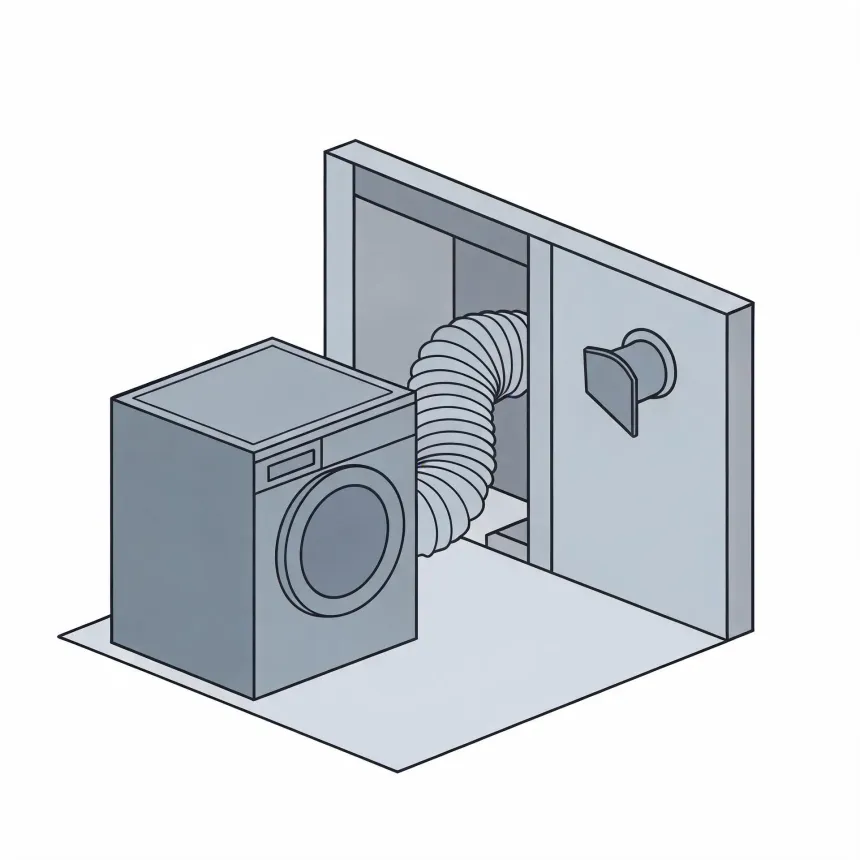
Your dryer pushes out warm, damp air, and it has to travel through a vent that sits in cold space most of the year. December through February, nights here average 12 degrees. That cold hits the warm air moving through the vent and cools it fast, and the moisture in it settles on the vent walls instead of carrying outside. Lint sticks to those damp walls and stays there.
Once lint builds up, the vent can't clear itself the way a clean one does. Airflow drops, the dryer takes longer to dry a load, and the motor and heating element work harder than they should for months at a time, October through May.
- 12°F
- the average winter night, and cold vents catch damp lint
- 8 months
- October through May, the vent stays cold
NOAA nClimDiv, 1991–2020 normals
- How often should a dryer vent be cleaned?
- Once a year for most households. Lint builds up along the inside of the duct even when the lint trap looks clean after every load, and that buildup is what a yearly cleaning removes. A longer vent run or one with several bends will collect lint faster than a short straight one, so those are worth checking between cleanings.
- Can I clean my dryer vent myself?
- You can clean the first few feet near the dryer yourself, but most homes have vent runs that go through walls or up to a roof cap, and that part is hard to reach with a vacuum or a brush from a hardware store. A contractor uses rods and a brush sized to the duct to clear the whole run, including the elbows where lint tends to catch. If your vent run is short and straight, a snake brush kit can handle it.
- What are the signs of a clogged dryer vent?
- Clothes that take longer than one cycle to dry, a dryer that feels hot to the touch on the outside, and a burning smell when it runs are the main ones. You might also notice little airflow at the outside vent hood when the dryer is going, or the vent flap barely moving. Lint gathering around the lint trap door or the outside vent opening is another sign the duct itself needs attention.