Mini Split Installation in Appleton, WI
A new system here will heat from September through May and cool from June through August every year. Tell us about the house, and a licensed contractor who covers Outagamie County will get in touch.
Tell us about the job
It takes about a minute.
What Appleton winters ask of a mini-split
Your mini-split works nine months a year here, September through May, with winter nights averaging 13°F. Not every heat pump keeps producing heat at that temperature, so the model matters as much as the installation. Come June, it switches to cooling for three months of afternoons near 79°F, then back to heat again once fall comes.
A unit built new has to meet 7.5 HSPF2 for heating and 14.3 SEER2 for cooling, the federal minimum for split-system heat pumps since January 2023. That is the floor, not a guarantee it will hold heat on a 13°F night. Winter storms are common enough in this area that power loss is worth planning for too. In 2024, 18% of Wisconsin households went at least 24 hours without power, and how a mini-split restarts once power comes back is worth asking about before it goes in.
- 9 months
- September through May, your system heats
- 3 months
- June through August, it cools
- 13°F
- the average winter night it heats against
- 79°F
- the average summer afternoon it cools against
NOAA nClimDiv, 1991–2020 normals
Wisconsin requires contractors to register with the state.
Registration means the state has the contractor's business on file. Nobody tested their work to get there, and no exam or trade credential sits behind that record. Wisconsin also does not let counties or cities layer on their own HVAC license, so wherever you are in Outagamie County, this registration is the only state-level record that exists.
For a mini-split installation, the protection that matters comes from elsewhere. In most cities and counties, installing a mini-split needs a permit from the local building office, with an inspection once the work is done. That inspection is what checks the work actually got done right, not the registration.
Sources: Wisconsin Legislative Reference Bureau · Wisconsin Department of Safety and Professional Services
- Is a mini split worth it?
- For most homes here, yes, especially for a room that never got its own duct run or a house on gas heat that wants cooling without adding ductwork. Winters here get down to 13°F on average, so the mini split you choose needs a cold-climate rating built for that, not a standard model. Summers only need cooling from June through August, so the bigger year-round demand it carries is heat, September through May. A contractor can look at your specific rooms and tell you what size and how many heads make sense.
- How many rooms can a mini split cover?
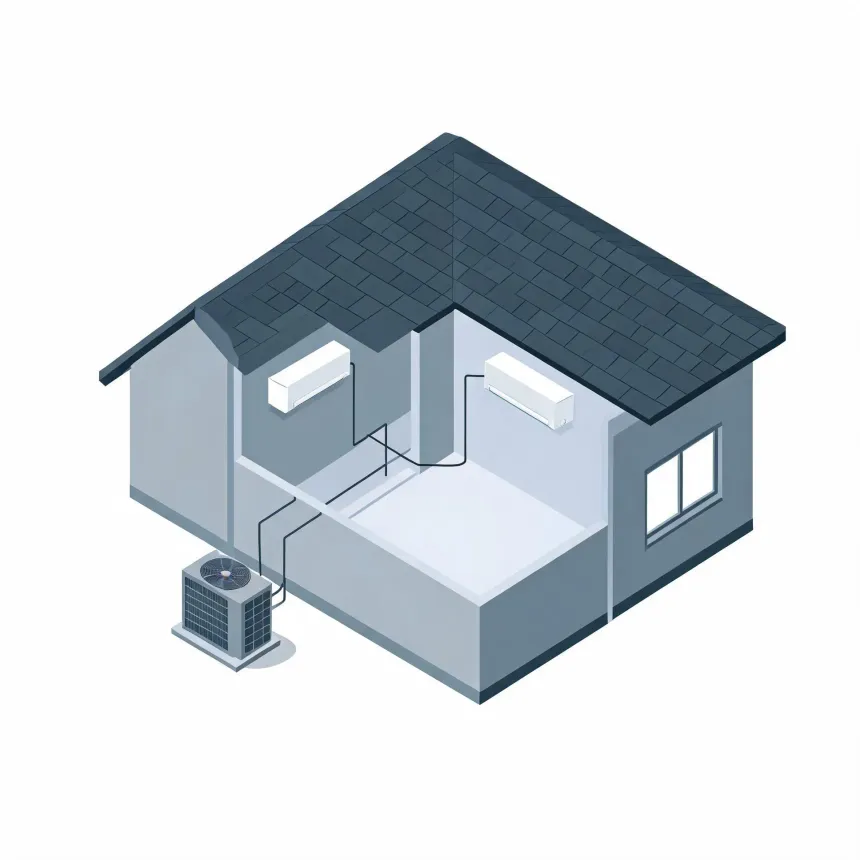
- One outdoor unit can run several indoor heads, so it depends on the system you choose. Each head handles its own room or open area, so a multi-zone setup can cover a good part of a house if the rooms are placed right. The limit is the outdoor unit's total capacity split across however many heads you connect. A contractor will size it based on the square footage and layout of the rooms you want covered.
- Can a mini split heat a whole house?
- It can, if enough zones are placed to reach every room, but that takes planning, not just one indoor head. A single head warms the room it's in well but won't push heat through closed doors or down a hallway to the rest of the house. Homes here need heat from September through May, nine months a year, and winter nights average 13°F, so whole-house coverage means sizing the system for real cold, not mild days. A contractor can walk your house and tell you how many zones it would take.