Mini Split Installation in Watertown, WI
A new system here will heat from October through May and cool from June through August every year. Tell us about the house, and a licensed contractor who covers Jefferson County will get in touch.
Tell us about the job
It takes about a minute.
Watertown asks a mini-split to run most of the year
Winter nights here average 15°F from December through February, and a mini-split has to keep pulling heat out of that cold air night after night. Summer afternoons average 81°F, so the same unit switches over to cooling for June through August. Homes here need heat or cooling 11 months a year, so the system is rarely sitting idle.
Any mini-split installed new has to meet the federal minimum for a split-system heat pump, 14.3 SEER2 for cooling and 7.5 HSPF2 for heating. In a place that leans on heat October through May, the heating side of that rating matters as much as the cooling side.
- 8 months
- October through May, your system heats
- 3 months
- June through August, it cools
- 15°F
- the average winter night it heats against
- 81°F
- the average summer afternoon it cools against
NOAA nClimDiv, 1991–2020 normals
Wisconsin requires contractors to register with the state.
Registration puts a contractor's business on file with the Department of Safety and Professional Services, but nobody is tested to get it. There is no trade exam behind that record, so it tells you the business exists and filed its paperwork, not that anyone checked their work. Wisconsin also keeps counties and cities from adding their own HVAC license on top, so the rule is the same in Jefferson County as it is everywhere else in the state.
For a mini-split, the check that matters happens after the registration part is done. Most cities and counties require a permit for a mini-split installation, along with an inspection once the work is finished. That permit and inspection are what a local building office uses to look at the installation itself, since the state registration does not cover that.
Sources: Wisconsin Legislative Reference Bureau · Wisconsin Department of Safety and Professional Services
- Is a mini split worth it?
- For most homes here, yes, especially for a room that isn't on the ductwork, like a converted attic or a garage. Winter nights average 15°F here, and a cold-climate mini split can still heat through that. Since homes here need heat or cooling 11 months out of the year, a system that handles both jobs in one unit gets used most of the year, not just a few weeks.
- How many rooms can a mini split cover?
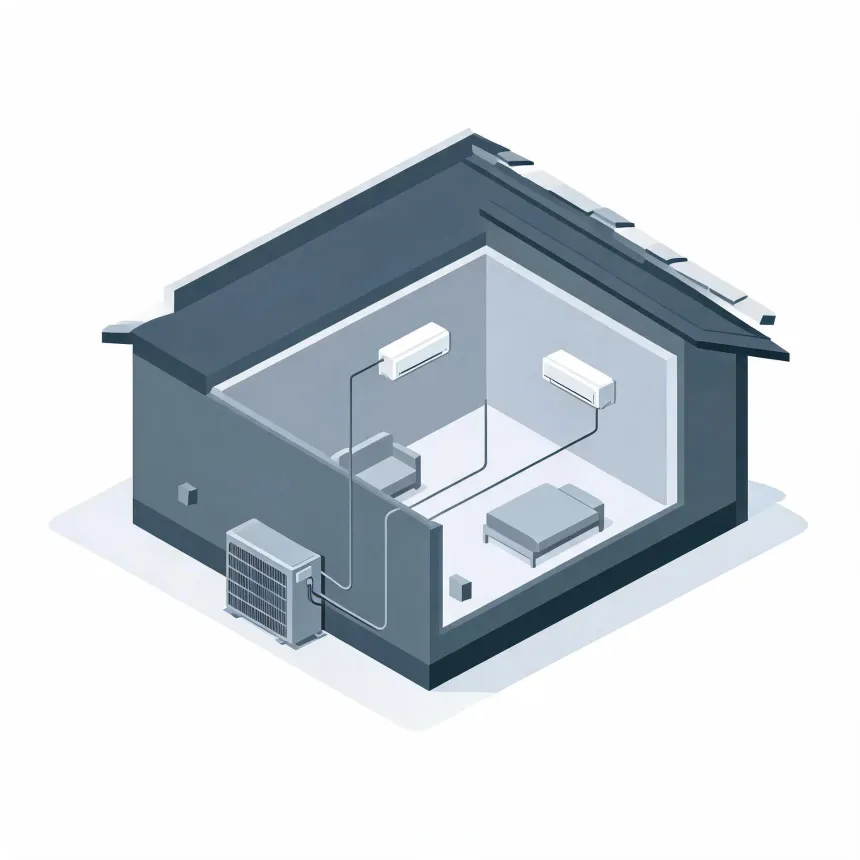
- A single outdoor unit can run up to eight indoor heads. Each head heats or cools the room it's mounted in, so coverage depends on how many heads you install and how those rooms connect, not just the size of the outdoor unit. A contractor can work out how many zones your house actually needs.
- Can a mini split heat a whole house?
- It can, if enough indoor heads are placed to reach every room. A multi-zone system with one head per room, or per open area, can carry the whole heating load on its own, and cold-climate models keep working well below freezing. With winter nights here averaging 15°F, whole-house sizing has to account for that low point, so get a contractor to size it for your house specifically.