Mini Split Installation in Waukesha, WI
A new system here will heat from October through May and cool from June through August every year. Tell us about the house, and a licensed contractor who covers Waukesha County will get in touch.
Tell us about the job
It takes about a minute.

What Waukesha County asks of a mini-split
Your mini-split needs to work almost the whole year here. Homes in Waukesha County need heat from October through May and cooling from June through August, 11 months out of the year with barely a break between. On winter nights that average 16°F, the heat pump has to keep pulling warmth from air that cold, and on summer afternoons averaging 80°F it has to keep up on the other end too.
A new unit sold today has to meet the federal minimum for this kind of system, 14.3 SEER2 for cooling and 7.5 HSPF2 for heating. That's the floor, not a guarantee it will hold up to a Waukesha County winter. Sizing it to the cold nights and the long season matters as much as the rating on the box.
- 8 months
- October through May, your system heats
- 3 months
- June through August, it cools
- 16°F
- the average winter night it heats against
- 80°F
- the average summer afternoon it cools against
NOAA nClimDiv, 1991–2020 normals
Wisconsin requires contractors to register with the state.
That registration puts the business on file with the state, nothing more. Nobody tests the contractor's skill or checks their work before handing it over. Wisconsin also keeps counties and cities from layering on their own HVAC license, so this registration is the only state-level record you will find, no matter where in the county you are.
For a mini-split install, the protection that matters comes from the local building office instead. In most cities and counties, the installation needs a permit and an inspection once the work is done. That inspection is what checks the work here, not the registration.
Sources: Wisconsin Legislative Reference Bureau · Wisconsin Department of Safety and Professional Services
- Is a mini split worth it?
- For most homes, yes, especially if you're heating or cooling a room your main system doesn't reach well, like a bonus room or garage conversion. A mini split runs on its own thermostat and only conditions the space it's installed in, so you're not paying to heat or cool rooms you're not using. Here, winters get down to 16°F on average, and a mini split heat pump can still handle that kind of cold, though a contractor can tell you whether it covers your full heating load or works best alongside your existing furnace.
- How many rooms can a mini split cover?
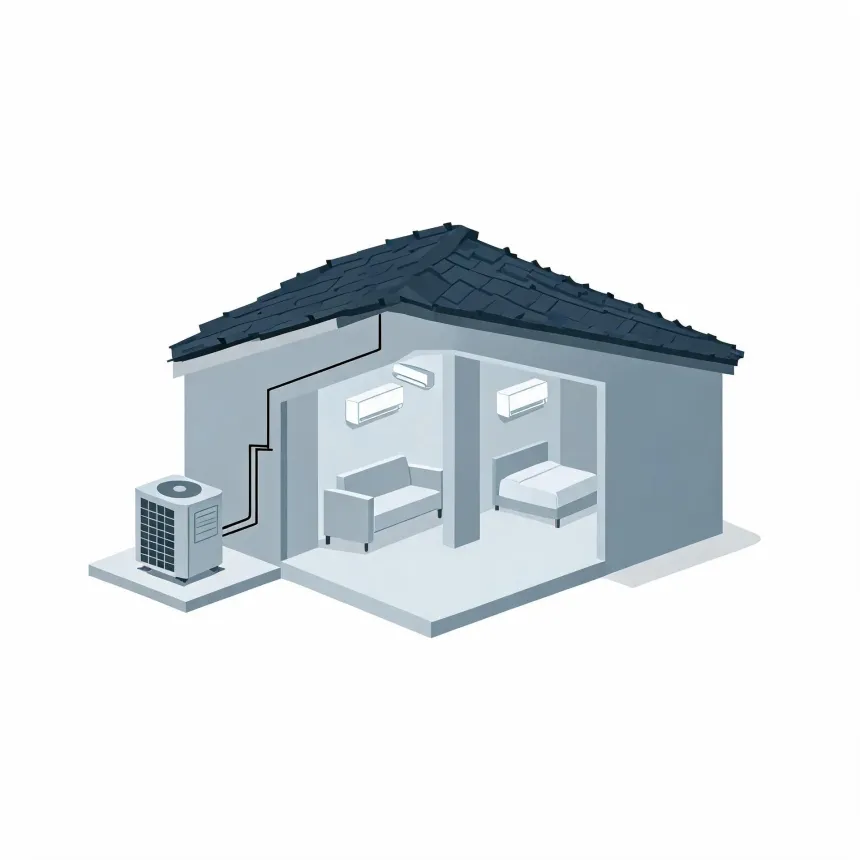
- A single indoor unit is built for one room or an open area, but multi-zone systems connect up to eight indoor units to one outdoor unit, each with its own thermostat. How many rooms you can cover comes down to the size of the outdoor unit and how those rooms are laid out. A contractor sizes the system to the square footage and the layout of your house, not a fixed number of rooms.
- Can a mini split heat a whole house?
- It can, if it's sized and placed for that from the start. A whole-house setup uses a multi-zone system with an indoor unit in each main room, all run off one outdoor compressor. Since homes here need heat eight months out of the year, from October through May, and winter nights average 16°F, a contractor will want to check that the system you're looking at is rated to keep up on the coldest nights, not just the average ones.