Mini Split Installation in Milwaukee, WI
A new system here will heat from October through May and cool from June through August every year. Tell us about the house, and a licensed contractor who covers Milwaukee County will get in touch.
Tell us about the job
It takes about a minute.
What Milwaukee winters and summers ask of a mini-split
Your mini-split will run eleven months a year here. Heat is needed October through May, and cooling through the summer months. Winter nights average 18°F. Summer afternoons average 79°F. That's a long heating season with real cold in it, and the heat pump side of the system has to answer for most of that work.
Any mini-split installed new has to meet the federal minimum for a split-system heat pump, 14.3 SEER2 for cooling and 7.5 HSPF2 for heating. That's the floor, not a target picked for Milwaukee. Wisconsin also sees its share of winter storms and damaging wind, and in 2024, 18% of households in the state went at least a day without power. A mini-split needs power to run, same as any heat pump.
- 8 months
- October through May, your system heats
- 3 months
- June through August, it cools
- 18°F
- the average winter night it heats against
- 79°F
- the average summer afternoon it cools against
NOAA nClimDiv, 1991–2020 normals
Wisconsin requires contractors to register with the state.
Contractors register with the Department of Safety and Professional Services.
Look up a contractor's registration on the Department of Safety and Professional Services' website.Sources: Wisconsin Legislative Reference Bureau · Wisconsin Department of Safety and Professional Services
- Is a mini split worth it?
- For the right room, yes. A mini split heats and cools one space well without ducts, which makes sense for an addition, a garage, or a room that never feels right on the main system. Winters here average 18°F, so check that any unit you're considering is rated to keep up at that temperature, since not all of them are. A contractor can look at the room and tell you whether a mini split or another option fits better.
- How many rooms can a mini split cover?
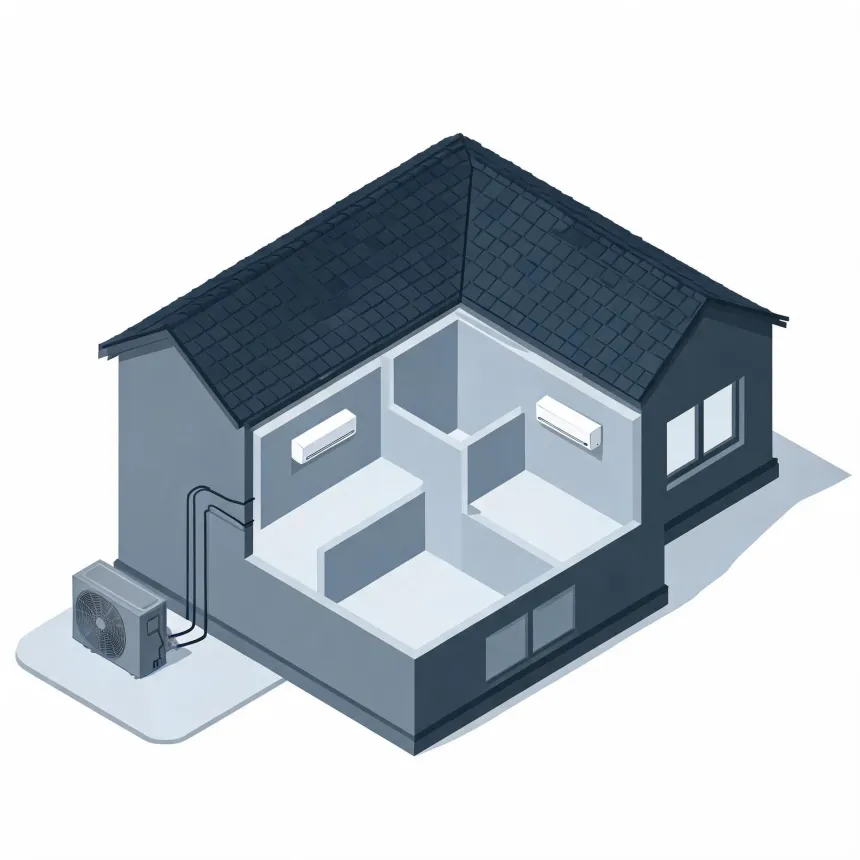
- A single outdoor unit can run up to eight indoor heads, each one serving its own room. The more heads you run off one outdoor unit, the less heating and cooling power is left for each room, so a system sized for a couple of rooms won't do the same job spread across many more. A contractor sizes the outdoor unit and the number of heads to the rooms you actually want covered.
- Can a mini split heat a whole house?
- It can, but it takes the right setup, not just one indoor unit. A whole house needs enough indoor heads placed to reach every room, and an outdoor unit sized for all of them together, especially with winter nights here averaging 18°F. Most homes in Milwaukee already heat with gas furnaces tied to ductwork, so covering the whole house with a mini split is a bigger project than adding one for a single room. A contractor can walk the house and tell you what it would take to cover all of it.