Mini Split Installation in West Bend, WI
A new system here will heat from October through May and cool from June through August every year. Tell us about the house, and a licensed contractor who covers Washington County will get in touch.
Tell us about the job
It takes about a minute.
West Bend asks a mini-split to work most of the year
Winter nights here average 14°F, and homes need heat from October through May. That is 8 months of the year the compressor is running to keep up, on top of the 3 summer months it spends cooling against afternoons near 79°F. Only one month goes by without a call for either.
A mini-split installed here has to be sized for that 14°F night, not just for a mild fall day, or it will run flat out and still fall short. Any unit manufactured now has to meet 14.3 SEER2 for cooling and 7.5 HSPF2 for heating, but a system matched to this climate is what actually keeps the house comfortable through both ends of the year.
- 8 months
- October through May, your system heats
- 3 months
- June through August, it cools
- 14°F
- the average winter night it heats against
- 79°F
- the average summer afternoon it cools against
NOAA nClimDiv, 1991–2020 normals
Wisconsin requires contractors to register with the state.
Registration puts the business on file with the Department of Safety and Professional Services. Nobody tested this contractor to get on that list, and there is no trade exam standing behind the name. Wisconsin also keeps counties and cities from layering their own HVAC license on top, so this state record is the only one that exists, wherever in Washington County the job is.
For a mini-split installation, the protection on this job comes from the local building office rather than the state. Most cities and counties require a permit for this kind of installation and an inspection once the work is done, and that inspection is what checks the work itself, since registration does not.
Sources: Wisconsin Legislative Reference Bureau · Wisconsin Department of Safety and Professional Services
- Is a mini split worth it?
- For the right space, yes. A mini split heats and cools without ductwork, so it works well for a room addition, a garage, or a house that relies on window units or space heaters now. Winter nights here get down to 14°F on average, and cold-climate mini splits are built to keep producing heat at those temperatures, so it can carry real heating load here and not just take the edge off. Whether it makes sense for your house depends on which rooms need it and what's heating or cooling them now, and a contractor can walk through that with you.
- How many rooms can a mini split cover?
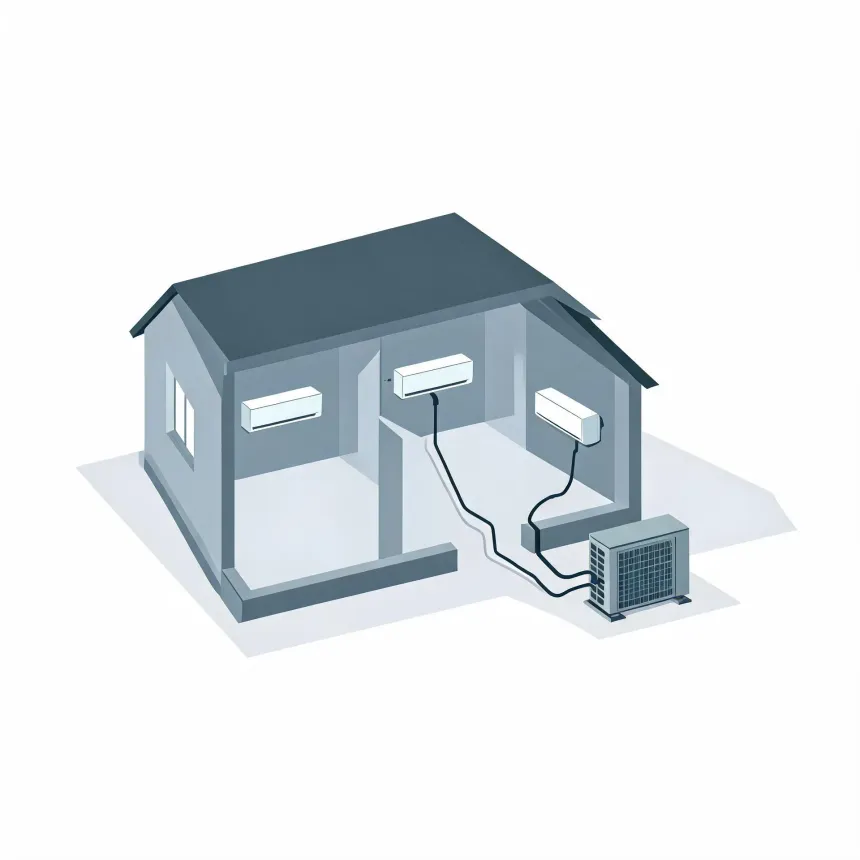
- A single outdoor unit can run one indoor head or several, depending on the system. Single-zone systems cover one room or one open area. Multi-zone systems connect up to eight indoor heads to one outdoor unit, with each head controlled on its own, so you can heat or cool only the rooms you're using. The right count comes down to the size and layout of the rooms, which is something a contractor needs to see in person to size correctly.
- Can a mini split heat a whole house?
- It can, if there are enough indoor heads placed in the right rooms and the system is sized for the house. Homes here need heat eight months a year, October through May, with winter nights averaging 14°F, so the heat pump has to be rated to keep working at those temperatures without falling back on backup heat. A cold-climate mini split is built for that. Getting full-house coverage right means a contractor looking at the floor plan, not guessing at a number of heads.